


You must consider many factors when choosing insulation for underfloor heating. Thermal conductivity, moisture resistance, ease of installation and compatibility with your flooring system. You also want to follow the manufacturer’s recommendations and consult with a professional installer. This ensures the insulation meets the specific requirements of your underfloor heating system.
With the right insulation in place, underfloor heating becomes a fantastic way to help heat homes and insulate floors. Simply combine one of many underfloor heating kits with the correct underfloor heating insulation to ensure you have a warmer home for longer. In this guide, you can discover our recommendations for the best insulation for underfloor heating. Find out what sizes are available to you and how insulation can help maintain the heat in a property.
Table of contents
- What insulation should I use for underfloor heating?
- Underfloor heating sizes
- When fitting underfloor heating, where should you fit insulation?
What insulation should I use for underfloor heating?
When it comes to underfloor heating systems, it is important to choose the right insulation to enhance the performance and efficiency of the heating system. So, what should you look out for before laying insulation for underfloor heating?
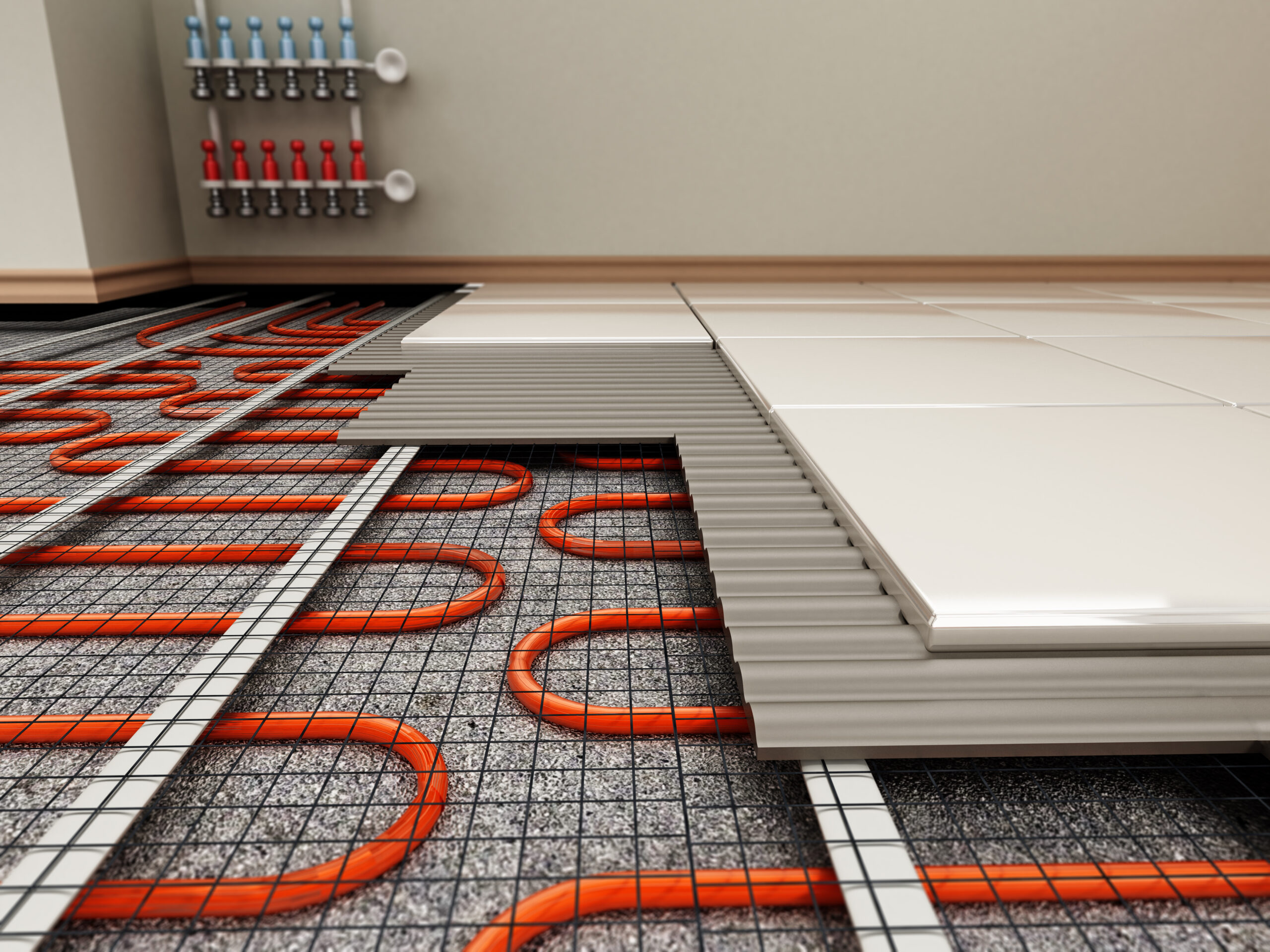
Here are some of the most common insulation materials used for underfloor heating.
PIR insulation
PIR (polyisocyanurate) insulation materials:
- Offers high thermal efficiency
- Is often used in underfloor heating systems
- Has low thermal conductivity
- Provides effective insulation
We recommend a Recticel Eurothane PIR board with an underfloor heating kit.
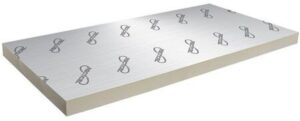
This board is:
- Resistant to moisture from any dripping pipes or leaks
- Comes with a Class 1 fire rating (meaning that after 10 minutes, a flame can’t spread more than 165mm.)
- Boasts an efficient U-value of 0.22 W/mK (so you can install this underfloor heating insulation into the floor space easily)
- Is available in different thicknesses from 25mm to 140mm
Recticel insulation board isn’t only for underfloor heating insulation applications. You can also use it for pitched roofs and framed walls thanks to its rigid shape. This shape makes it easier to install than some other insulation types.
If you’re looking for an alternative solution, you should check out ProWarm. Their PIR boards are:
- Designed specifically for use as Class 1 insulation alongside underfloor heating systems
- Greatly reduce heat-up time and running costs (helping you save money on your energy bills)
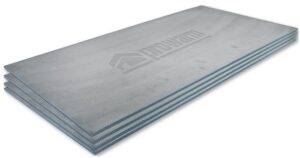
Moreover, BodenWärme underfloor heating insulation boards are another excellent choice. They:
- Effectively decrease the operational expenses of your electric underfloor heating system
- Enhance heat-up durations by up to a massive 50%
- Are lightweight yet strong, with a compressive strength of 30 tonnes per m² (allowing them to be suitable for nearly any tiled floor installation)
Underfloor heating insulation boards aren’t the only option.
XPS insulation
XPS (extruded polystyrene) insulation is another popular choice for underfloor heating. It:
- Has excellent thermal properties
- Can withstand the high temperatures associated with underfloor heating systems
- Is durable
- Has moisture-resistant properties
- Provides good thermal conductivity
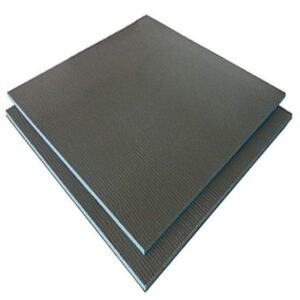
EPS Insulation
EPS (expanded polystyrene) insulation is another commonly used material for underfloor heating. It:
- Is lightweight
- Is easy to install
- Has good thermal insulation properties.
- Is available in various thicknesses to suit different insulation requirements
Cork Insulation
Cork insulation is a natural and sustainable option for underfloor heating. It:
- Has good thermal properties
- Is resistant to moisture
- Provides acoustic insulation as well
So, it should come as no surprise that cork boards or rolls are commonly used for underfloor heating applications.
Underfloor heating sizes
Our wide range of the best insulation for underfloor heating has a plethora of sizes to choose from. With sizes available up to 200m² coverage, you can find the right amount for the task ahead.
Wattage also varies from as little as 140w to as high as 200w. So you have even more choices when choosing an underfloor heating system.

When fitting underfloor heating, where should you fit underfloor heating insulation?
You can learn more about how to lay insulation for underfloor heating in our guide to laying underfloor heating.
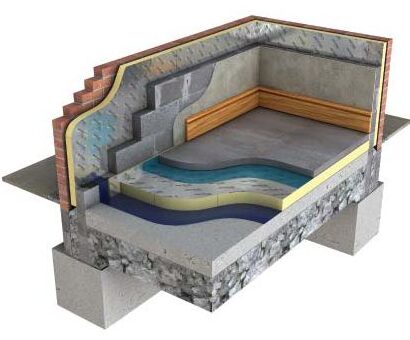
Manufacturers’ instructions will vary. Typically, you need to lay the insulation down underneath the system, being careful not to leave any large gaps. Do this as neatly as possible, taping the joints together to prevent the screed from falling underneath.
If fitting a wet system, place the pipe fixing system on top of the insulation at a 90-degree angle relative to the direction you will lay the pipes.
Want to learn more about underfloor heating? Check out our guide for everything you should know about underfloor heating.