

To have an efficient and cost-effective underfloor heating system in your home, you need to choose flooring which offers good conductivity. This means that the heat being generated below it can easily pass through the floor surface to warm the room.
A very thick carpet, for example, won’t allow as much heat to pass through it as tile. The underfloor heating will need to be on a higher temperature for longer to reach the same room temperature. So, can you have underfloor heating with wooden floors? Read on to find out!
Table of contents
- Can I have wooden floors and underfloor heating?
- Choosing the right underfloor heating wooden floor
- What’s the best flooring to have with underfloor heating?
- To conclude
Can I have wooden floors and underfloor heating?
In short, yes! However, there are certain things you must know when selecting a wooden floor that will be installed over an underfloor heating system.
Solid wood floors and underfloor heating
Solid wood floors are not particularly recommended when opting for underfloor heating. They are not a good conductor of underfloor heating, so the heating will need to be on longer and at a warmer temperature to get the same effect as tile or stone floors. It’s advised, though, that underfloor heating does not exceed 27°C with solid wood above it, as moisture levels in the wood change.
Changes in heat lead to changes in the moisture level of the wood. This results in flexing and changing of the solid wood.
That said, solid wood flooring can also be used if it is properly acclimated and installed over underfloor heating systems with appropriate precautions.

Engineered wood floors and underfloor heating
If you’re sure you want an underfloor heating wooden floor, then opt for engineered wood floors. This type of flooring responds much better to changes in temperature as it’s treated and manufactured to do so. Engineered wood flooring is thick enough for a luxurious, good-looking wood floor, but it’s thin enough to conduct heat from the floor upwards with little resistance.
In general, engineered wood flooring tends to be more compatible. It is designed to be more stable and less prone to warping or cracking due to temperature changes compared to solid wood flooring.
Choosing the right underfloor heating wooden floor
When deciding whether to choose underfloor heating under floorboards, there are a few factors to be aware of. Let’s take a closer look at the main ones.
Heat conductivity
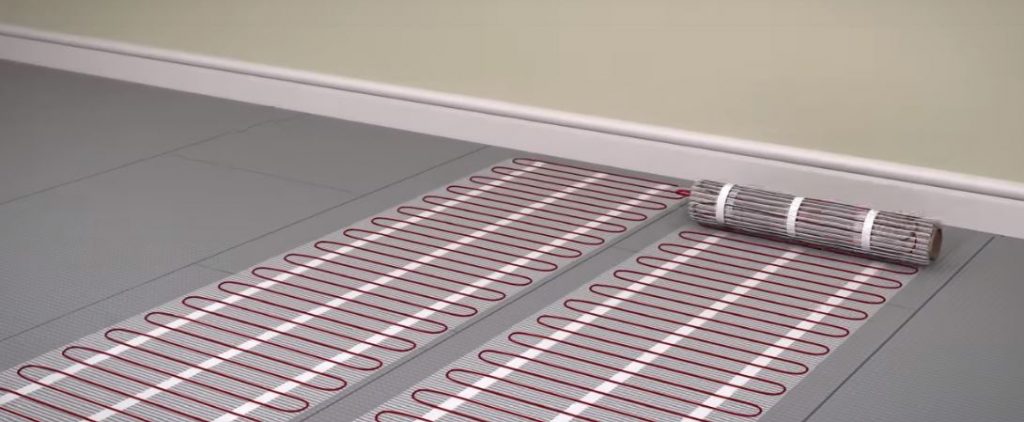
Wood is a natural insulator. It can slow down the transfer of heat from the underfloor heating system to the room above. So, it’s essential to select wooden flooring with good thermal conductivity to ensure efficient heat distribution.
As we mentioned earlier, thinner boards or engineered wood with a lower thermal resistance are generally better suited for use with underfloor heating.
Installation method
The installation method of the underfloor heating system and the wooden flooring is crucial. It’s essential to follow the manufacturer’s guidelines and recommendations for both the heating system and the flooring to ensure compatibility and prevent damage to the floorboards.
Temperature control
Proper temperature control is essential to prevent overheating of the wooden flooring, which can lead to the wood:
- Warping
- Cupping
- Drying out
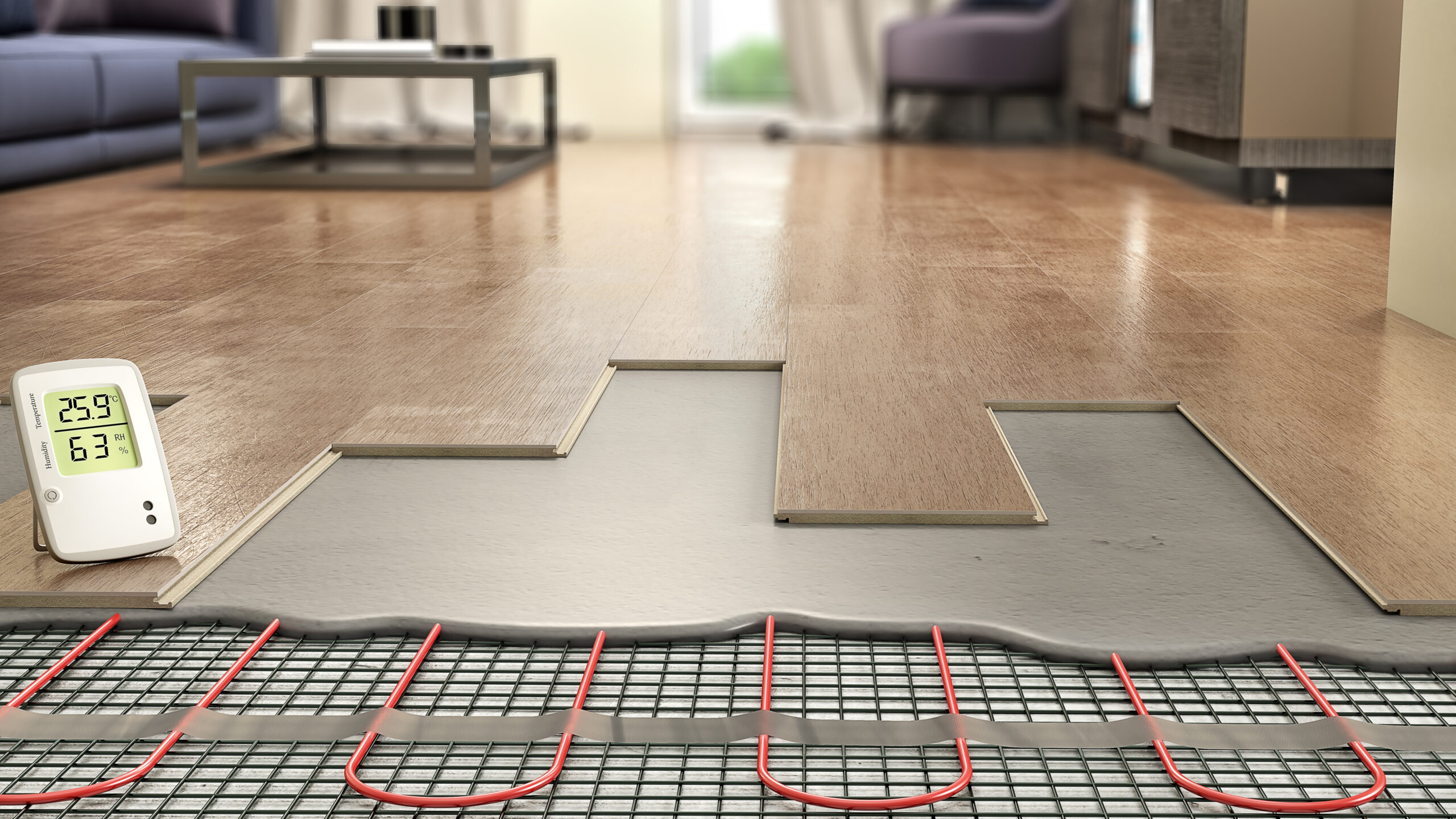
Use a thermostat with floor temperature sensors to monitor and regulate the temperature of the floor surface, ensuring it stays within the recommended range for the type of wooden flooring installed.
Acclimation period
Before installation, wooden flooring should be acclimated to the room’s temperature and humidity levels to minimise the risk of expansion or contraction after installation. This helps to prevent gaps or buckling in the flooring due to changes in environmental conditions.

What’s the best flooring to have with underfloor heating?
In an ideal scenario, you’ll have tile or stone floors to pair with your underfloor heating system, as they have a high thermal conductivity.
These types of flooring also retain heat quite well. So, when the heating itself is off, the floor will continue to emit heat. We recommend laying tiles or a stone floor in rooms with large amounts of glazing where heat loss is an issue (for example, conservatories).
To conclude
Underfloor heating can be a comfortable and efficient heating solution for rooms with wooden floors.
That said, it’s essential to choose the right type of flooring, follow proper installation procedures and control the temperature carefully. This ensures optimal performance and longevity of both the heating system and the floor.
Consulting with a professional installer or contractor experienced in underfloor heating and wooden flooring installations can help ensure a successful outcome.

Was this guide useful?
Mentioned in this project guide: